Pemberton's Fishfinder, Brad Knowles, reported last week that Anderson Lake is now seeing sockeye entering the lake in large numbers. The sockeye make their way up the mighty Fraser River to Lillooet, then they hang a left at Seton River, and continue through Seton Lake, to stage in Anderson Lake. The run lasts about a … Continue reading Seasonal Observations: the Sockeye and the Trout
Category: Seasonal Observations
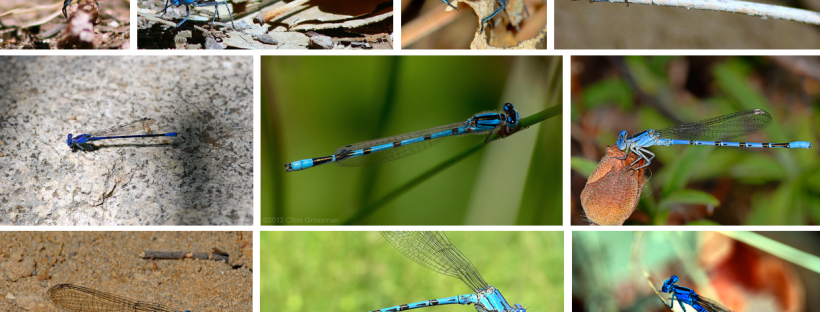
Seasonal Observations: Damselflies
After falling slave to Deadline Madness for almost a decade, I managed last summer to redefine "urgency." (Broadly speaking, the top 3 drop-everything-and-go-for-it priorities are Love. Strawberries. Summer.) Practically speaking, that has meant jumping into a lake whenever I ride by. And this week, that has meant noticing how many damselflies are out at Mosquito … Continue reading Seasonal Observations: Damselflies
Campfire Ban in Effect – Thursday, August 1, 2013
Effective at 12 noon on Thursday, Aug. 1, 2013, all open fires, including campfires are banned in all areas of the Coastal Fire Centre, which includes Pemberton and surrounding area. This does not apply to cooking stoves that use gas, propane or briquettes, or to a portable campfire apparatus (ie: your BBQ). This step is … Continue reading Campfire Ban in Effect – Thursday, August 1, 2013
Salmon Migration Study, Fraser River – Anderson Lake
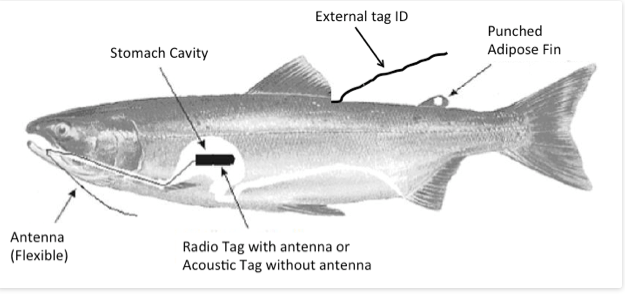
This post is reprinted from The Pemberton Fish Finder. From August to November 2013 researchers from the University of British Columbia, in partnership with the St’at’imc and N’Quatqua First Nations, are studying adult sockeye, pink, Chinook, and coho salmon migration in the Seton-Anderson watershed and in the Fraser River near the Seton River. Salmon are … Continue reading Salmon Migration Study, Fraser River – Anderson Lake
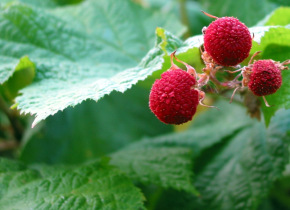
In season: thimbleberries
This post is a re-post from July 30, 2012. The thimbleberry, or Snow Bramble (Rubus parviflorus) is now bearing fruit. A member of the Rosaceae (Rose Family), the thimbleberry is a perennial flowering plant, native to North America. The fruits or berries of these shrubs are edible and are sweet in taste. The berries can’t be stored for … Continue reading In season: thimbleberries
Sighted: Blue Grouse
The blue grouse (dendrapagus) breeds at the edge of conifer forests in high and mid mountain areas. One of BC's legendary upland game birds, the male blue grouse has a "ventriloquisitic courtship call" that can be heard for miles. BC has over 50% of the world's population of blue grouse. For most of the year … Continue reading Sighted: Blue Grouse
Sighted: Cliff Swallow Colony
Heather Baines, retired physician and Pemberton's regional coordinator of the BC Breeding Birds Atlas survey, recently took a remarkable picture near Carpenter Lake, just west of Lillooet, that our birding correspondent John Tschopp has shared. It shows a colony of Cliff Swallows that lives up to its name. The birds built their nests against a cliff … Continue reading Sighted: Cliff Swallow Colony
Seasonal Observations: The Spring Bird Count
63 species of bird was spotted along a 25km stretch of the Pemberton Meadows, on Saturday, for the Breeding Bird Survey of 2013. Reports ornithologist-wrangler John Tschopp, "it was a good turnout and the birds were cooperating. Highlights included a Bullock's Oriole at the Lillooet Lake Road, a black-headed grosbeak singing above the bridge over … Continue reading Seasonal Observations: The Spring Bird Count
Event: Breeding Bird Survey, Saturday, 8am, The Pony
Eagle-eyed birdwatchers (and eagle watchers, too) can rub shoulders with birders from the BC Ornithologists, who are sending a delegation to Pemberton on Saturday, to help with the breeding bird survey. Bring water, sunhat, binoculars and sharp eyes. Car pool to help keep things streamlined along the route. Meet at 8am at the Pony parking … Continue reading Event: Breeding Bird Survey, Saturday, 8am, The Pony
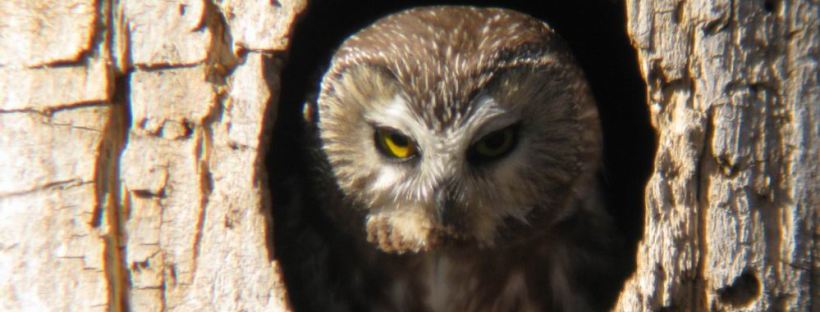
Seasonal Observations: Northern Saw-Whet Owl
Earlier this spring, Stewardship Pemberton reported hearing the call of the northern saw-whet owl in the 'hood. The Saw-whet Owl's name comes from the "skiew" call that is made when alarmed. This sound has a resemblance to the whetting of a saw. (Follow this link to listen to the call - a series of whistled … Continue reading Seasonal Observations: Northern Saw-Whet Owl