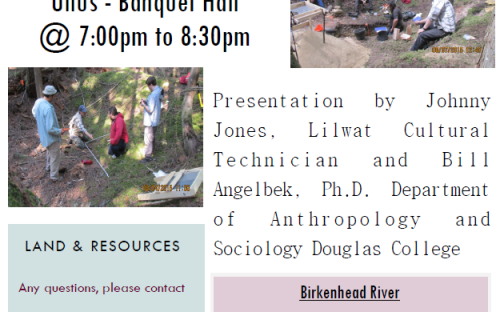
I read two incredible longform articles this year that both referenced the renewed appreciation scientists have for the oral stories for First Nations - the way those long-ago stories are checking out in the geological record, providing clues and adding evidence to theories about massive events that we don't have computer records of. Check them … Continue reading Breaking News: Carbon dating establishes Lil’wat settlement to be 5500 years old
Category: lil’wat culture
Tomorrow, join the Lil’wat Lands and Resources office for their Tea & Talk with guest Lex Joseph
Tea and Talk on Territory, Thursday January 21
Johnny Jones has shared a host of stories with us on the Wellness Almanac, so this Tea & Talk on Thursday at the Lands & Resources Office looks well worth stopping in for.
You are invited to browse the Lil’wat7ul Culture Centre and pick up some unique seasonal gifts
The Lil̓wat7úl Culture Centre at Úll̓us Community Complex in Mount Currie has some great new products available. from baskets to jewellery, leatherwork and regalia. Drop by anytime for 8:30 - 4:30 Monday to Friday to check it out. You could win a genuine Lil̓wat jacket.
Those who were here first: New exhibit at the Museum features First Trails of the Lil’wat Nation
from the Museum's blog: On August 11th, 2015 we had Randy Bouchard, Dorothy Kennedy and Johnny Jones at the Museum. Randy Bouchard, Dorothy Kennedy and Johnny Jones' presented on the Lil'wat Nation's first trails. One of the themes in the museum’s collection mandate is “Those who were here first” and to provide accurate information about … Continue reading Those who were here first: New exhibit at the Museum features First Trails of the Lil’wat Nation
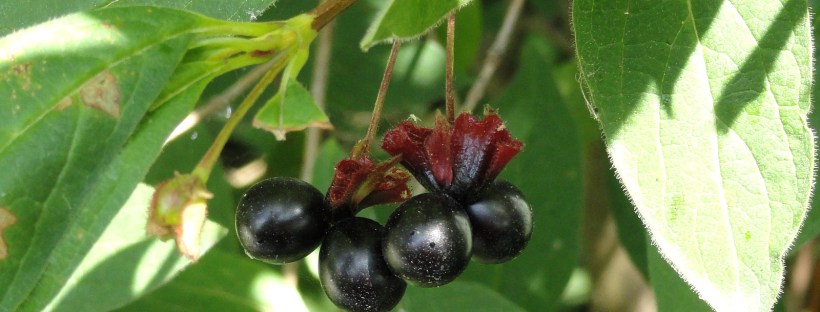
Twinberry honeysuckle – one berry best left for the birds and the bears
The berries are eaten by bears, small mammals, quail and grouse, and song birds such as thrushes. The flower is a source of nectar for hummingbirds and butterflies. The plant is host for the larva of certain butterflies. But they're not edible for humans. Best to tell the kids they're poisonous.
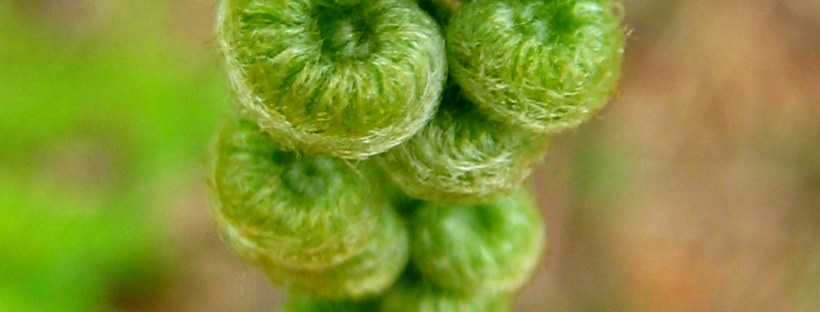
Bracken Fern, producer of fiddleheads, means “eagle like fern”
Fossil evidence suggests that bracken fern has had at least 55 million years to evolve and perfect antidisease and antiherbivore chemicals. It produces bitter tasting sesquiterpenes and tannins, phytosterols that are closely related to the insect moulting-hormone, and cyanogenic glycosides that yield hydrogen cyanide (HCN) when crushed. It generates simple phenolic acids that reduce grazing, … Continue reading Bracken Fern, producer of fiddleheads, means “eagle like fern”
Emergency toilet tissue when out in the bush? Thimbleberry has you covered
Look for the berries in July. You can make them into jam. And the thimbleberry leaf makes a good toilet paper substitute when you’re out in the woods!
Today’s Native Plant Love shout out goes to the Red Alder