
On Saturday, the Mount Meager Restoration project team headed up to the rehab site and shared this update and photos of frogs and toads and Life finding a toehold in the debris flow:
via https://www.facebook.com/profile.php?id=100092850217506

In early June 2023, we planted the first ~30,000 trees on the Capricorn Creek landslide site (the first site of many planned). We selected an area that had some natural recruitment, mostly alder, and some areas of standing water. As you recall, since May 2023, we have had very little rain, extremely low precipitation, and some very high temperatures.
The landslide site was mostly inaccessible all summer due to high temperatures which increase landslide risk, but we finally got to site September 8 to get the first look at survival.
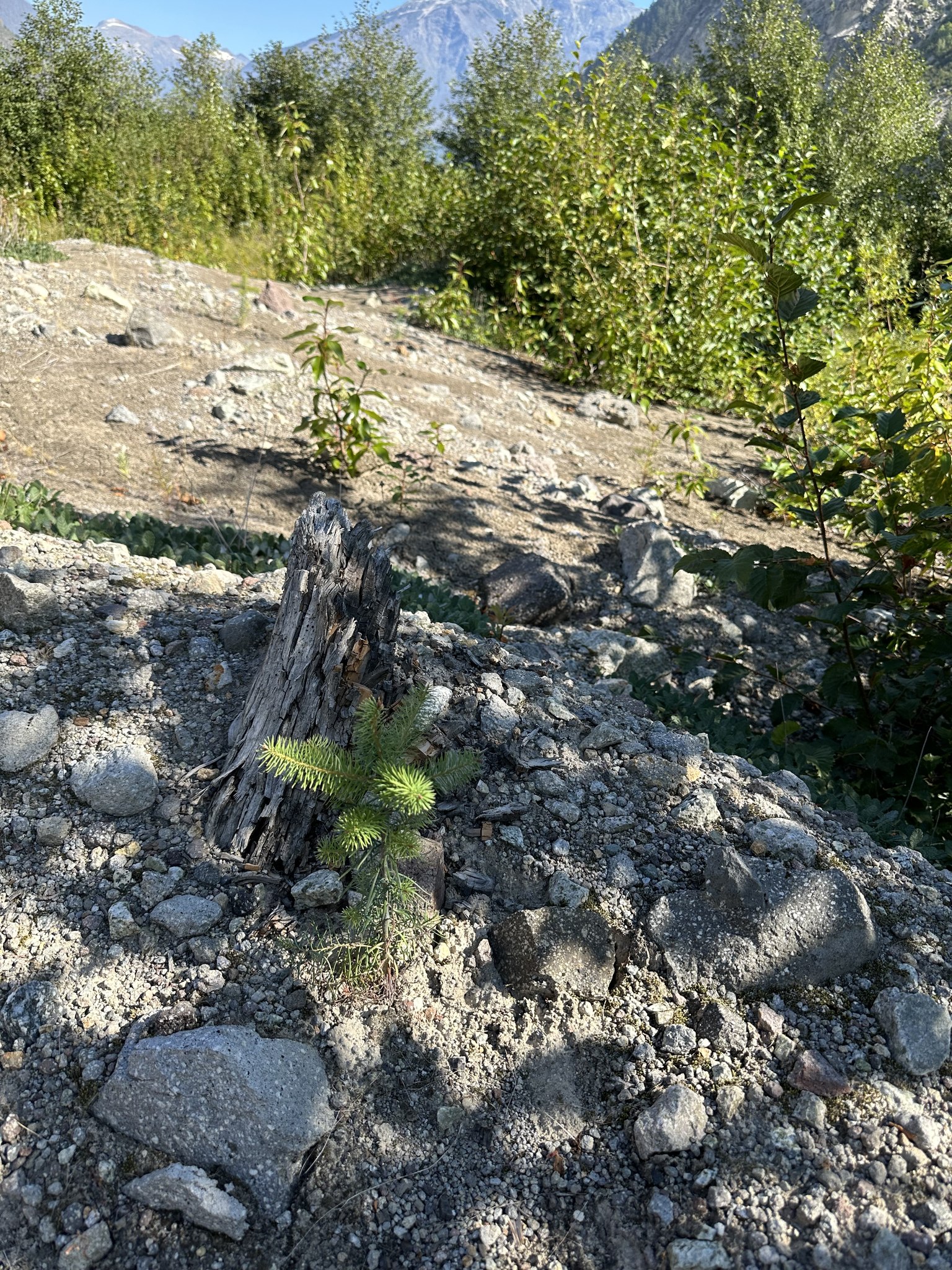
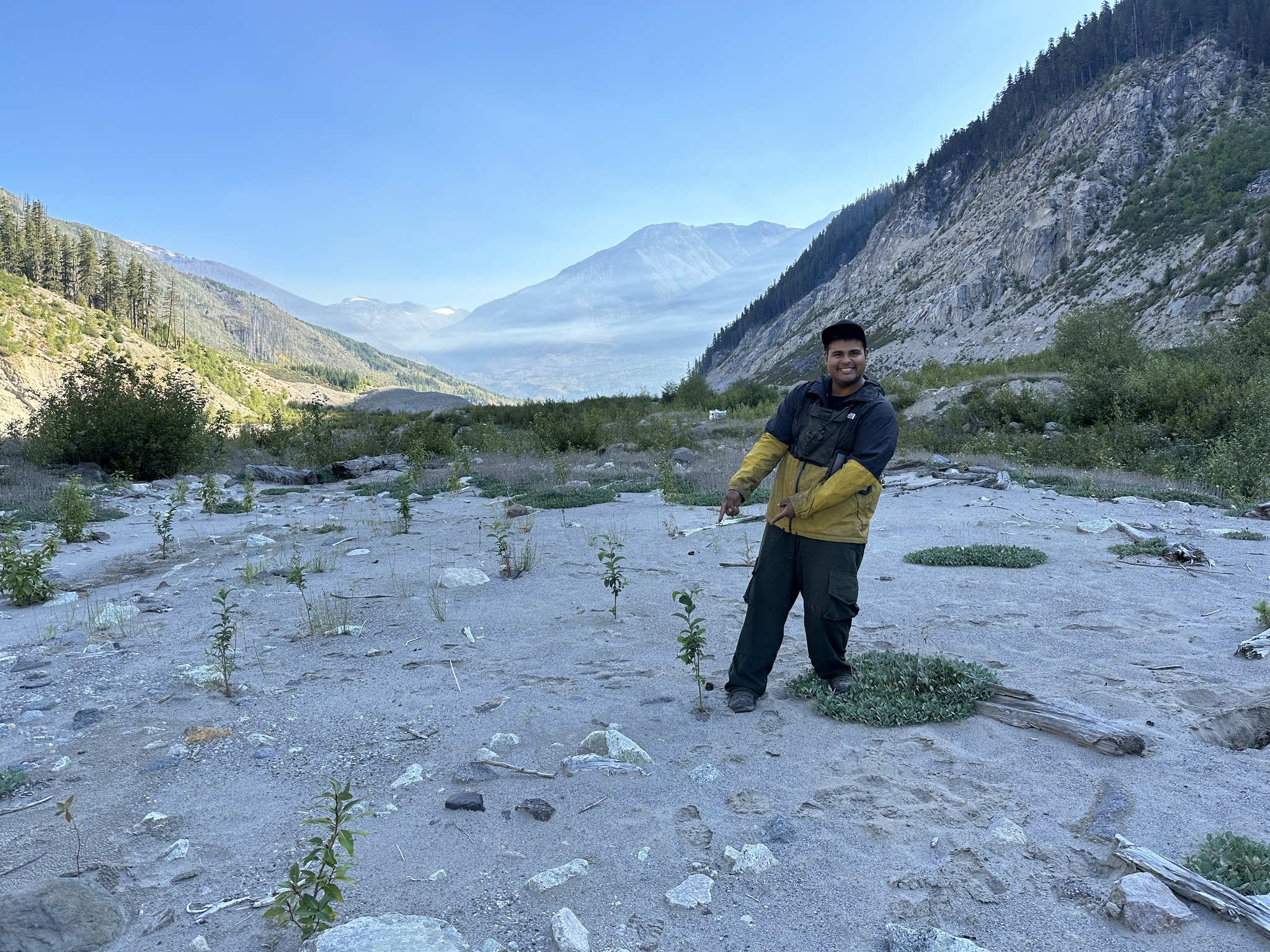
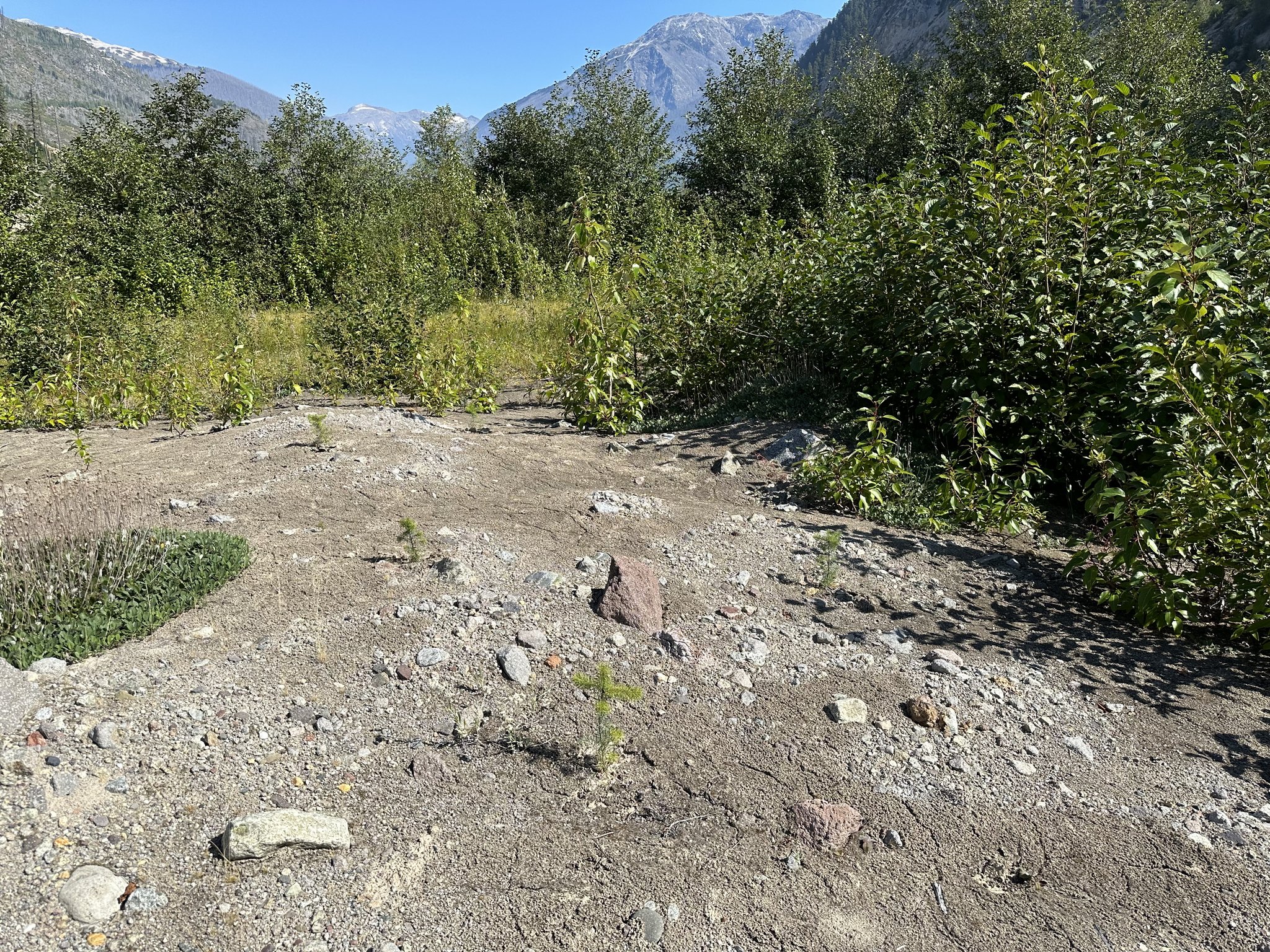
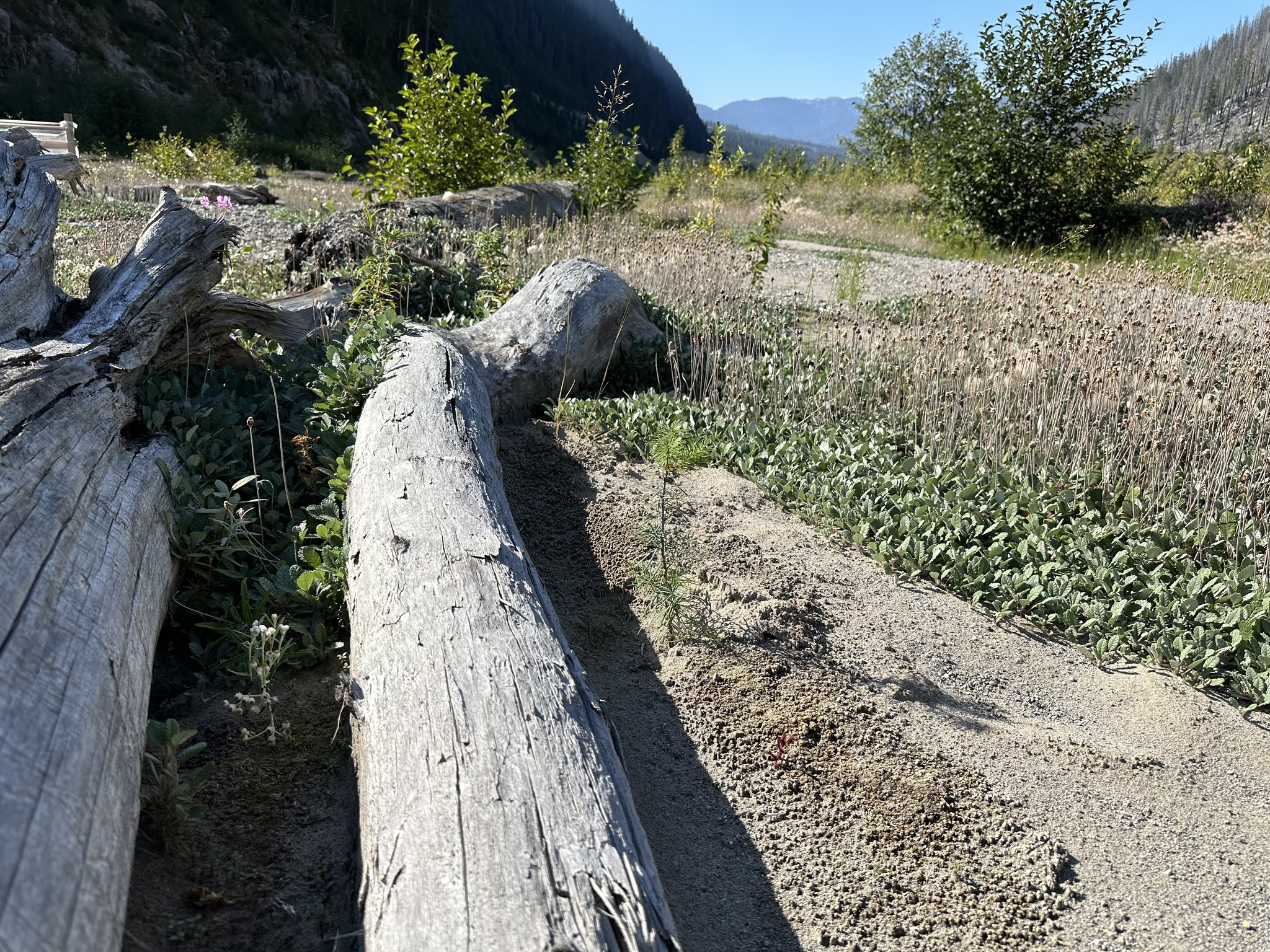
We readied ourselves to be happy with 20% survival but instead we were ELATED to find that more than 70% of the trees are both alive and thriving!
Planting conditions in the slide are less than favourable as it is very rocky, sandy, compact, with little topsoil. Maybe there is some magical lichen in the mountain-top debris that has littered the valley floor, or we chose a particularly dewy microsite, but the plants are loving it.
As this site is being planted for ecological restoration rather than strictly timber harvest values we had the flexibility to design the planting differently.
For some conifers, we planted a Red Alder (Alnus rubra) plug in the same hole. Red Alder has nitrogen fixing qualities that we thought would give the conifers a boost in the nutrient poor soils. We are going to watch the success of this strategy closely. With the extensive wildfires this summer, we have been hearing discussions about increasing the role of deciduous trees in the landscape. There are a lot of opportunities to learn from this site.






 The Wellness Almanac