Sometimes I have fantasized about creating a Community Wellness Check-ometer – a kind of annual reporting mechanism by which we track certain metrics and gauge the overall wellbeing and resilience of the larger community.
Data can be overwhelming, but I imagine there are a small handful of keystone pieces of information that tell you huge amounts – the kind of acupressure points of a community that give insight into how the vital energies are flowing.
If I had to identify the metrics, I would pick a body of water – in measuring the water health/quality, and the salmon returns, we’d get a solid environmental indicator. I’d measure maternal mental health, because that would indicate how supported new mothers are feeling and would serve as a pretty thorough social indicator. I would measure language revitalization successes – how many people are learning, speaking, studying Ucwalmitws, how many places incorporate the language. I have a feeling this could indicate how we’re doing at holding the truth and moving towards reconciliation, and how safe and supported people feel to embrace and be held by culture. And finally, I would take the pulse of the volunteer sector – this would probably be a kind of economic indicator – how much has to be done by volunteers, how energized are they, how many people are willing and able to show up for each other.
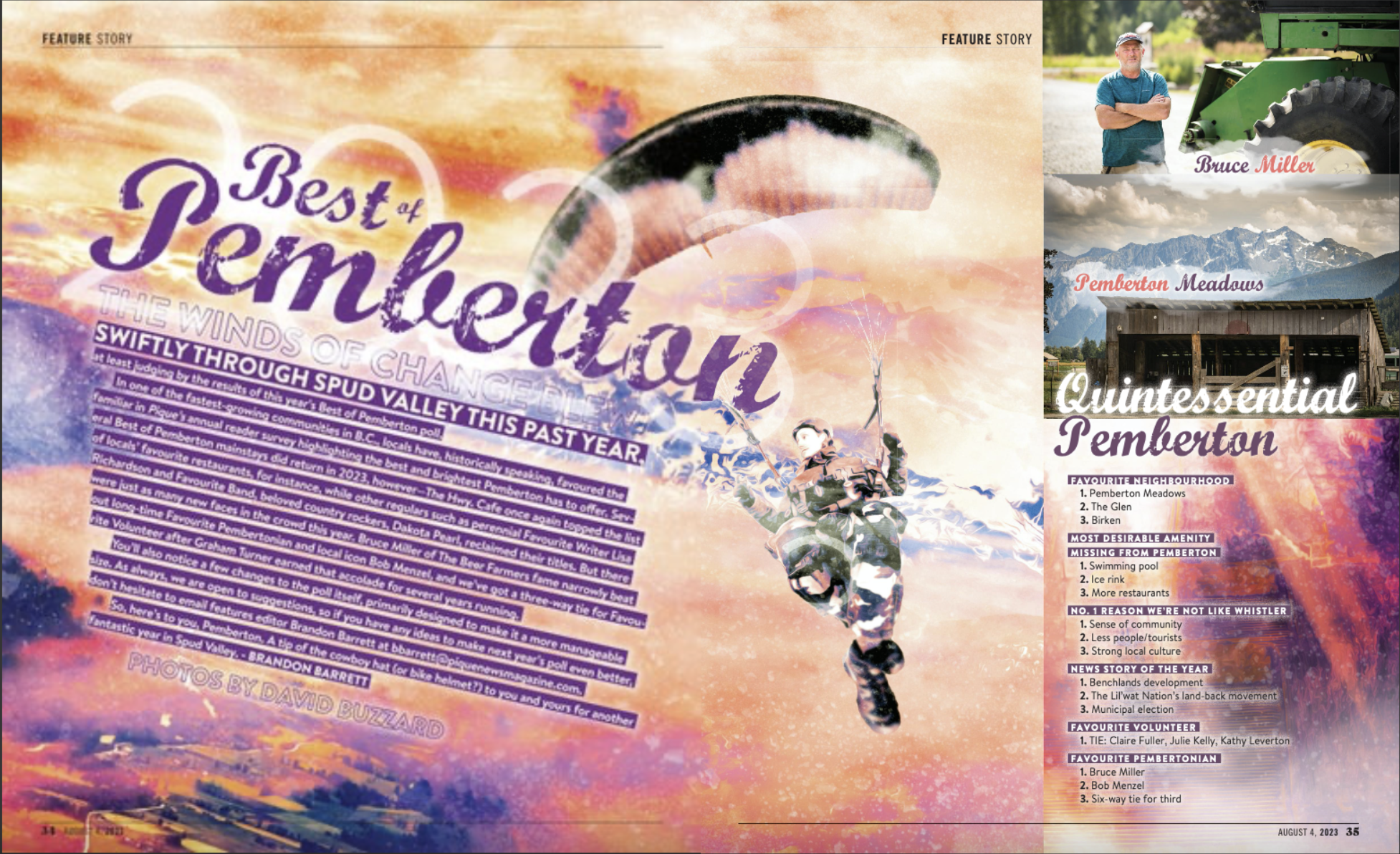
I loved seeing the recent Best of Pemberton poll results surfaced recognition for some new names in the “Favourite Volunteer” category, in large part because I know all three of the women recognized, and know how much energy they have poured into the community over the years, AND I can think of dozens of other folk who contribute immensely – from search and rescue volunteers to the Lil’wat Nation members who grabbed their work boots and answered a call to help the community at Tsalalth in the face of the Casper Creek fire, to parents getting their kids’ prom happening or off to sporting events, to all the people not technically volunteering but going so far above and beyond the bare minimum required in their roles.
Community resilience is our ability to experience hard things, disruptions and amazing moments, and still think of ourselves as something more than fragments, individuals or adversaries. It’s not easy, in these times. It requires constant tending. It is fed by ritual and ceremony and celebration and culture.
As my favourite (non-local) artist, Molly Costello, says, “We will grow our futures on foundations of care.” Literally, we are calling forth the future we will have to live through, in our gestures of care and consideration or carelessness and callousness. Feels so much better to be a future-steader, than a future-eater, especially when it lets you be part of something right now.

 The Wellness Almanac