The girls at Dandelion & Clover (sisters Lea and Nicole Ronayne) have deep roots in this place and its soil – their family has been farming and gardening in the Pemberton Meadows since 1899. I love watching their instagram account for little gardening updates that can only come with that level of depth of relationship.
My 20 years living here will always feel shallow, will always have me feeling a bit fumbly, when it comes to earth-wisdom. All the information I know has been learned and logged (and forgotten, and re-learned), and none of it is part of my body, in the way that our bodies recognize something about the places we are born. (A decade ago, I went back to Australia for a quick visit, after several years away, and all these words came flooding back into my mind as we walked around a national park, like memories being teased forth. There is enough belonging in my body, from being born there, for my body to have logged certain information… and here, it’s all landed in an older body, and that just takes a bit more effort…. rewarding effort, but effort all the same.)
This doesn’t make me feel less-than, as though I don’t have a contribution to make. It just helps me have a sense of where I can contribute and where I can defer to someone’s greater wisdom. We’re all needed. And wonderful local naturalists and land stewards and people with generations-deep wisdom, are troves that I treasure.
One of the posts I loved, and share here, is about phenology. (A large part of the Wellness Almanac has been to slowly accumulate some of these shared noticings, like in this post where we round up the signs of spring https://thewellnessalmanac.com/2018/04/12/seasonal-observations-its-spring-and-love-is-in-the-air/)
Phenology, derived from the Greek word phaino, meaning “to show or appear,” is literally “the science of appearance.” It is a segment of ecology focused on the study of periodic plant and animal lifecycle events related to climate and seasonal changes. Although these natural observations can be done year-round, spring is a great time to get started by recording all the “firsts” you see. From noting the first bud on a tree to spotting the first robin in your yard, observing and recording these events can be the beginning of a life-long relationship with nature. ~ http://naturenetwi.blogspot.ca/2011/02/nature-journaling-and-phenology.html
Aldo Leopold, the great naturalist and author of The Sand County Almanac, began keeping phenology records at a young age at his childhood home in Burlington, Iowa. He enjoyed figuring out the connection between two seemingly unrelated events – the return of a migratory bird and the budding of a tree in spring. Leopold continued to record phenological observations throughout his whole life, and the entire Leopold family took part in weekend phenology observations at their weekend cabin, a rebuilt chicken coop on the Wisconsin River. His eldest daughter, Nina, continued adding to the family’s phenology records until her death in 2011. Today, the staff at the Aldo Leopold Foundation maintains the Leopold family tradition of yearly record keeping.
Phenology… is a “horizontal” science” which transects all ordinary biological professions. Whoever sees the land as a whole is likely to have an interest in it.
-Aldo Leopold, “A Phenological Record for Sauk and Dane Counties, Wisconsin” for Ecological Monographs (1947)
PHENOLOGY
The study of changes in the timing of seasonal events such as budburst, flowering, dormancy, migration and hibernation. Some phenological responses are triggered principally by temperature, while others are more responsive to day length (Menzel et al., 2006).
Phenology deals with the relations between climate and recurring biological phenomena, such as bird migration or plant flowering. Put more simply, phenology is the study of when things happen in the natural world. It’s a science that involves the study of many activities of animals, insects, and plants.
Nature’s timing is exquisite. By the time birds lay their eggs, for example, shrubs and trees have leafed out enough so there’s cover from predators. By the time fish return to their spawning waters, insect larvae have hatched so there’s a ready food supply. Using phenology—relying on nature’s indicators rather than a set date on a calendar—may be the best way to triumph in the garden because it’s watching, learning, and working with nature rather than using other guides that are less connected to nature.
-Plant potatoes when the first dandelion blooms.
-Plant peas when forsythia blooms.
-Plant beets, carrots, cole crops, lettuce, and spinach when lilac is in first leaf.
-Plant tomatoes when flowering dogwoods are at their peak.
-Plant corn when Oak leaves are the size of a squirrel’s/mouse’s ear
-When Crocus bloom – Ground temps are safe for radish, parsnip & spinach seeds
-Watch for Asparagus spears when Pears bloom
-When Redwing Blackbirds arrive or Forsythia blooms – Plant peas, lettuce & onion sets
-Watch for Daffodils before planting root veggies
-Quince in full bloom – It’s safe to transplant your cruciferous veggies outside
-Peony blossoms – Time to plant heat-loving melons
Acknowledging the land, as a practice, can be as simple as paying attention to the little things. My friend Asta has a 5 year journal – each day entry has 5 lines beneath it, designed so that you can make one note a day, and then go back to the beginning the next year, and after 5 years, have a series of observations of the cycles of your own life… What do you do on your birthday each year? How much do you evolve over 5 trips around the sun?
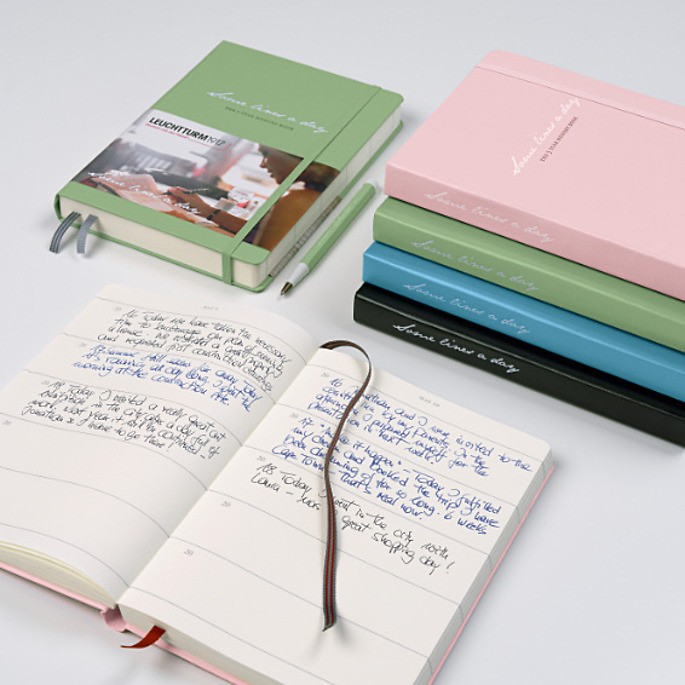
I love the idea, but wonder also what it would be like to use one to take notes about where I am, what I notice about the land around me, and her moods. My partner jokes about needing to invent a giant menstrual cycle wall clock, that you can quickly glance up at, at any time, and see, oh, day 8, irrational rage flare-ups. Good-o. It’s a joke, but it’s also an act of love, I think, to have someone say, I notice you and your moods and how they connect to the appearances and disappearances of other things. We are complex beings in a complex system, and tracking small things doesn’t reduce us, so much as let us get a glimpse at the sheer gorgeousness and inter-relatedness of it all.

 The Wellness Almanac