
Last night, I heard Leigh Joseph read at the Whistler Writing Society’s Stories and Music: Reflections on Wellness, Balance and Saving Lives event.
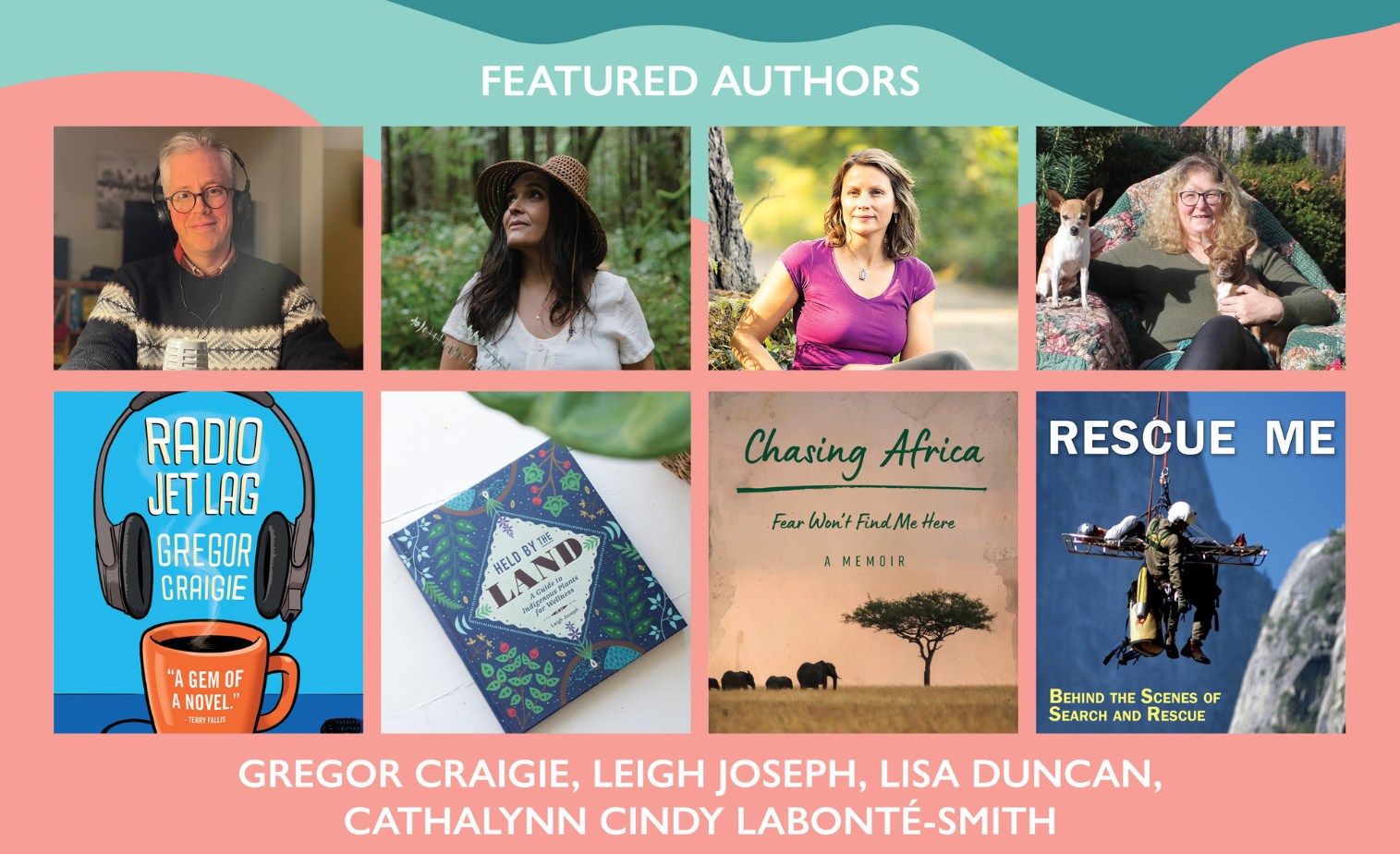
Each guest author read from their work, and the Sea to Sky Orchestra, who are wonderful, played, but it was when Joseph read this, that I closed my eyes and felt my whole body go “mmmm”… like a tuning fork had been rung and everything in me thrummed in a kind of reattuning, realigning, recognition.
She read from her beautiful book Held by the Land: A Guide to Indigenous Plants for Wellness:
Indigenous language is the DNA of place-based relationship. It carries with it the unique accumulation of experiences, stories, wisdom, and interrelationships. By definition, DNA contains the instructions for how an organism develops, survives, and reproduces to carry on into the future. Just as DNA is the carrier of genetic information, language carries the blueprint for how to be in relationship with a particular place. Language has the power to completely alter how we view the world and the frameworks we apply to our families, communities, and natural environments. Swe7u (s-weh-oh) means “to be named” in the Skwxwú7mesh language. I’ve been taught that when something is significant it is given a name.
Leigh Joseph
Isn’t that lovely?
When something is significant, it is given a name.
How much effort did my partner and I spend, dreaming and researching and trying to come up with a name for our baby? Of course, a name conveys significance.
She went on to read several Skwxwú7mesh words – words for the months of the year, which translate as ecological markers like “when the salmonberry shoots are collected” or “when the salal berries are right.” And place names that translate as “place of lots of devil’s club”.
One day, my partner wondered where language came from… what informed it… and I felt as though the answer must lie in the land where that language grew out of… the sound of the wind and water and animals must have been the teachers, no?
I love this insight about language being more than just syllables we breathe meaning and resonance into. More than grunts and sounds rendered slightly more refined over time. More than ways of saying me, you, mine, yours. But as pieces of code, essential code, that passes information about Life, down from generation to generation. Like DNA. Here is how we grow. Here is how we adapt. Here is how our species continues.

“Indigenous languages”, by which I understand languages of land-based cultures that are increasingly threatened by dominant global languages like English, but are rooted very deeply in place and relationship, (Skwxwú7mesh, Ucwalmicwts or Gaelic are three that interest me particularly, because they are the languages of lands that I want to be in deep relationship with – the places my ancestors came from and might once have been indigenous too, and these lands here that hold my current well-being in their soil and water), are codes and maps of place. Stories of significance.
And what the coding tells us, in those languages, if we look at little word sequences, in the same way we’ve been trying to understand life on Earth by splicing and sequences genes and DNA, is that we are fundamentally relational beings, and the most important relationship of all is the place we find ourselves.

I think this, for me, is why I am so grateful for the language teachers on this land, who work so hard in the schools, to create opportunities for people to speak and recover the kind of fluency we need to be in good relationship with our environs, with what surrounds us, with the place that holds us.

 The Wellness Almanac