
The moment I shared my intention to practice a personal acknowledgement of land and place every day, my lovely friend Lyndsey A. responded, with kind words, an acknowledgement that is is something she too is pondering, and a link to this TEDx talk, below.
We both share Aussie heritage… and it is shocking to see the parallels in the histories of both countries with respect to First Peoples. When I left Australia as a young ski bum, back in the mid 90s, it was becoming increasingly common to open gatherings with a land acknowledgement. It kind of surprised me that it wasn’t practiced in Canada, that it took decades before the practice did arrive here, and then the sudden speed with which it was adopted.
I have always wondered: who shaped those words? Who guided the phrasing? Who wrote the first script? Was it heartfelt for them? And why does it feel so jarring when someone who clearly doesn’t feel those words, speaks them at the start of a meeting?
I’ve shared conversations with Gelpcal Joseph about how hurtful it is to hear someone stand at the front of a room and open with “First off, I just want to acknowledge…”
“Just” is an odd little word that can mean “simply” and “exactly” and also “barely, by a little.” It might not be intended, but that word diminishes everything that comes after it. ie “I want to barely acknowledge the Lil’wat…” (Well, that’s what you’ve been doing all these years, so why do you have to announce it?)
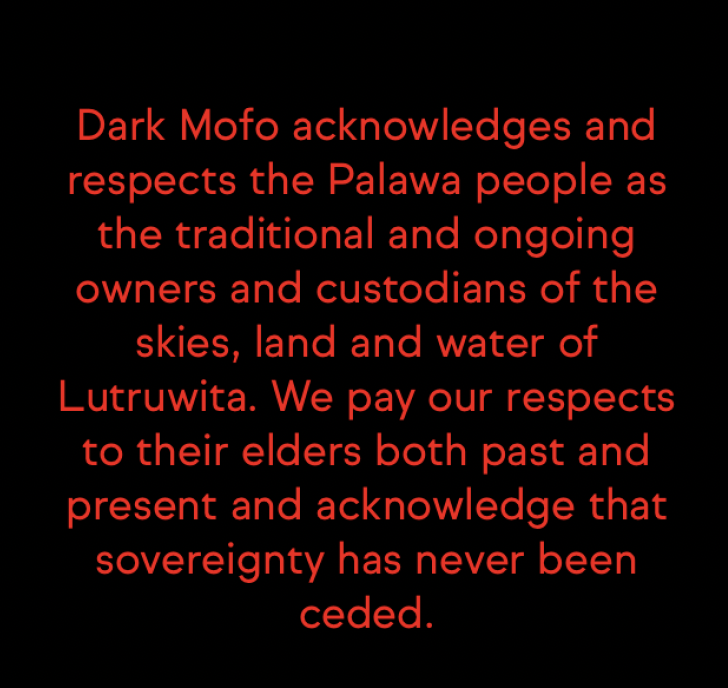
I recently screenshot the phrasing of a land acknowledgement made by a Tasmanian Winter festival. If you go to their website, the first page forces you to pause. And read. And it only closes when you click to close the box.
I have to say, I love this language. It thrums in me. I love the paying of respect to elders, past and present, and I love the acknowledgement that sovereignty was never ceded.
This feels so much more potent and open hearted than the weirdly defensive acknowledgements I often hear in this neck of the woods, about respecting the traditional owners of the land “where we work, live and play.” Why are we emphasizing what we’re doing? It feels like such a weird staking of a claim… yes, I’ll acknowledge you, grudgingly, but I’ll just reassert my right to live work and play here while I’m at it.
I don’t think it’s helpful for us to try and be in right relationship with anyone, and erase ourselves. But what exactly are we acknowledging, if we fail to mention that sovereignty was never ceded. And is it part of the brokenness of the dominant culture, that we feel we have to constantly centre ourselves. Oh yes, I acknowledge you, and WHAT ABOUT ME?!?!?
It’s okay not to always be centred.
Shelley Reys AO is a Djiribul woman of far north Queensland and a leader in the corporate, Indigenous and reconciliation spaces for nearly three decades. She gave a TEDx talk in Sydney, in January 2022, exploring so gently and kindly, what it means when people give lacklustre acknowledgements of country (or as we say it over here, “territory.”)
As she said, often over the last two decades, the script has become rote and seen as something we ‘have to say’ before we get to the ‘real’ reason of the business or gathering.
Her beautiful and generous insight is that people are so afraid of saying the wrong thing, that they stick tightly to the same thing, over and over.
In this powerful talk that Lyndsey drew my attention to, (Tear-jerker warning), Reys explains how to simply and meaningfully give your own Acknowledgement of Country and ensure this important cultural practice continues to be a powerful moment to honour and connect with First Nations culture and country.
If the embed below doesn’t work, you can open and watch in youtube here.
“At its very core, an acknowledgement of country is a beautiful, respectful pause of thanks. Thanks to the people who’ve looked after the land and water, on behalf of you and me, for more than 70,000 years.”
Shelley Reys

 The Wellness Almanac