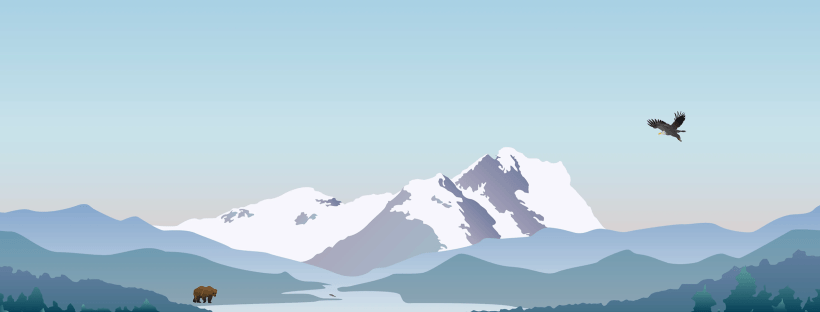
When I step out of my door, I see endless forest. Wood smoke from the chimneys mixes with the scent of pine and cedar. The rushing creek by my house is as loud as a highway. I hear dogs bark and wind in the trees. St’át’imc people, also known as the Lil’wat people, have been living off the land here for thousands of years. Artifacts from our people date back to 5,500 BCE. We have developed a rich culture here, and we still live closely connected with our land.
My name is Aidan, and I’m 16 years old. On my mom’s side, my family is from Samahquam, a small community at kilometre 33 on the gravel road on the west side of the Lillooet River. On my dad’s side, my family is from Kawacatoose First Nation in Saskatchewan. I was born in Vancouver, and lived in B.C. and Saskatchewan for most of my childhood. We moved 13 times that I remember, and lived in different apartments and houses. Last year, we moved back to Samahquam, because my mom had a good job opportunity.
Since I moved so much as a kid, I saw lots of different schools. I’ve been to eight different schools, and I learned that, to some degree, people are the same everywhere. I speak English, as well as some Cree and Ucwalmicwts, the language of the Lil’wat. Where I live now, I have an hour-long bus ride to school each way along a gravel road.
The bus ride I take to school each day along the Lillooet River follows the route that miners took to the gold rush in the Cariboo between 1858 and 1865. More than 30,000 gold-crazed miners travelled along the Harrison to Lillooet route. At that time, a single potato cost $1. Going farther downstream to the Fraser River and farther back in time to 1793, this is when Lil’wat people first made contact with Europeans and the Alexander Mackenzie expedition.
Every day from my school, Xet’ólacw Community School, I see a huge rocky mountain that’s so wide and fat it takes up half the horizon. In the winter, it’s snowy and bright, and when the seasons change to spring there are avalanches and landslides. This mountain is called T’szil by the St’át’imc people. The European settlers named the mountain Mount Currie, after John Currie, who was the first non-Indigenous settler in the Pemberton Valley.
At my school, every May 10 we celebrate Declaration Day. This day highlights one of the most important events in Lil’wat Nation history. Lil’wat Nation is one of the 78 nations that did not participate in the BC Treaty Commission process, and instead signed the Declaration of the Lillooet Tribe in 1911 together with other St’at’imc Nations. This declaration demands the reinstatement of traditional land rights and protests against the theft of First Nation land. To this day, our people hold rights and recognition over the land.
When I drive home, I see the trails leading up to the sacred Stein Valley. In 1989, the Lil’wat people worked on creating the “Save the Stein” initiative. Artists like Bruce Cockburn, Buffy-Sainte-Marie, and Gordan Lightfoot joined together with environmentalist David Suzuki to organize a concert and raise awareness about protecting the Stein Valley. This action protected the entire Stein Valley watershed, and has protected it to this day.
Lil’wat people protected this land against other nations and threats over the years. Despite losses, we never gave up the fight. To this day, we remain the rightful owner and protectors of our land. I love the forest, rivers and mountains here, and I hope they will always be here.
This article was written by Aidan Ducharme, and was published in the Pique newsmagazine issue 30.24 on June 16, 2023.
Image via https://www.samahquam.ca

 The Wellness Almanac