Recent research suggests that use of standard over-the-counter (OTC) medicines such as aspirin, ibuprofen and acetominophen may lead to longer illnesses and increased flu infection and death rates. Some of the mechanisms by which these phenomena are believed to occur may surprise you.
Recall that immune cells secrete chemical messengers into the blood to alert other cells to an invasion. Interferon, one such chemical messenger declares DEFCON 1, putting all uninfected cells on notice. In response, they manufacture enzymes that increase cellular resistance to infection. If we interrupt the transmission of this signal with OTC’s , the defenses of our unsuspecting cells are more easily overwhelmed and our own cells more easily converted to virus factories. In this way we unwittingly increase the length of time we are sick.
Interleukin, another potent chemical messenger, promotes important ‘sickness behaviors’ that serve as weapons in the fight against the enemy such as fever (flamethrower action) and withdrawal (quarantine) from our busy lives to hit the couch or the bed (rest & energy conservation). If we chemically reduce that fever, we are allowing the virus to crawl back out of its bunker and continue to replicate. If we feel better, we do not stay home and rest. We slow down our own recovery by returning too soon to community life and in the process inadvertently shed infectious virus over our unsuspecting neighbors and co-workers.
Aspirin and ibuprofen make us feel better in the short term by working against the body’s natural immunities. However, ‘feeling better’ is a poor end goal if it is not accompanied by healing and may cause more widespread issues. Data from the G. DeGroote Institute suggests that use of such medications by the general public during an influenza epidemic increases infection rates by 5% per year in North America. This increase translates to 1,000 additional deaths per year among people susceptible to influenza complications.
What to do?
Fevers can arise from many different types of infections as well as some cancers. Cause of the fever is important to know before you start self-medicating. Once your health care professional has assured you that it is not caused by a dangerous infection such as meningitis, there are herbs from your garden that you can use to support the body’s healing mechanisms through the course of the illness.
With the judicious use of botanical remedies, it is possible to ‘manage’ a fever arising from a self-limiting cause such as colds & flu, as opposed to ‘breaking a fever’ with chemicals.
Yarrow and elderflower are the quintessential fever herbs for older children and adults. When given as hot infusions (teas) they increase circulation, dilate blood vessels and stimulate sweating. As sweating is one of the body’s heat shedding mechanisms, the rising fever is prevented from becoming too high during the ‘chill’ stage. Catnip tea is a more appropriate fever herb for younger children.
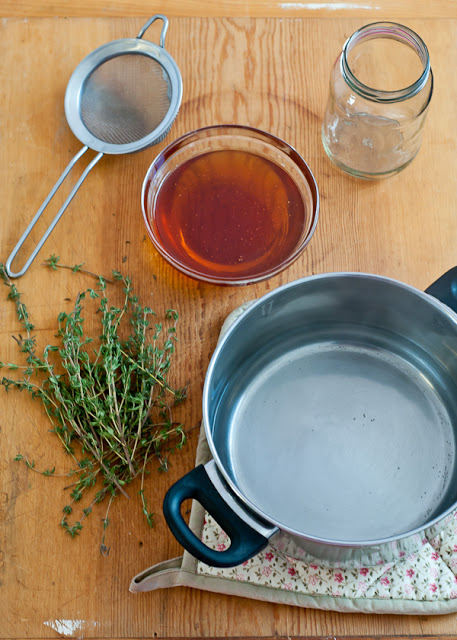
Dried thyme can be made into a very effective cough, cold and sore throat syrup. Pour 2 cups of boiling water over 3 tablespoons of dried thyme, cover and cool to room temperature. Strain and add 1 cup of delicious Pemberton-produced honey. Shake to mix well and refrigerate. Adults can take 1 tablespoon several times a day. Do not feed honey to children under 2 years of age as it is associated with sudden infant death syndrome.
Onions, garlic and Chinese mushrooms such as reishi, shitaki and maitaki provide effective relief from the symptoms of colds and flu and promote healing. Incorporate them into nourishing soups and stews.
Oregano, sage and rosemary can be taken from your garden or freezer and dropped into simmering pots of water. Put a towel over your head and breathe in their volatile oils to relieve congestion. Allow them to simmer on the stove to disinfect your living quarters, or buy the essential oils and use them in a diffuser for the same purposes.
The possibilities are endless. You are not dependent on Big Pharma for cold and flu relief. You only think you are because we have rejected the time tested traditional medicines of our ancestors – thrown out the baby (botanical medicine) with the bathwater (the hocus pocus). Making home remedies for everyday aches, pains and wounds is no more difficult or time-consuming than home freezing & canning.
I long for the day when the apothecary garden takes it’s rightful place in the family vegetable plot once again.

 The Wellness Almanac